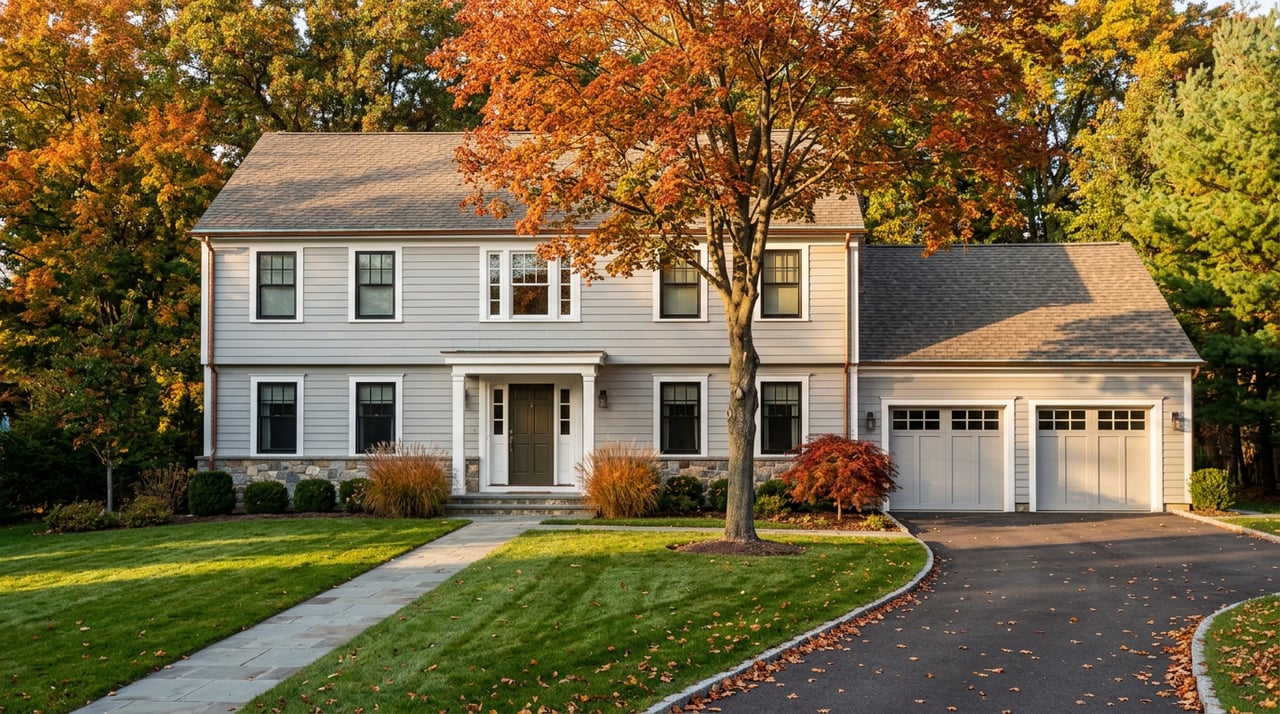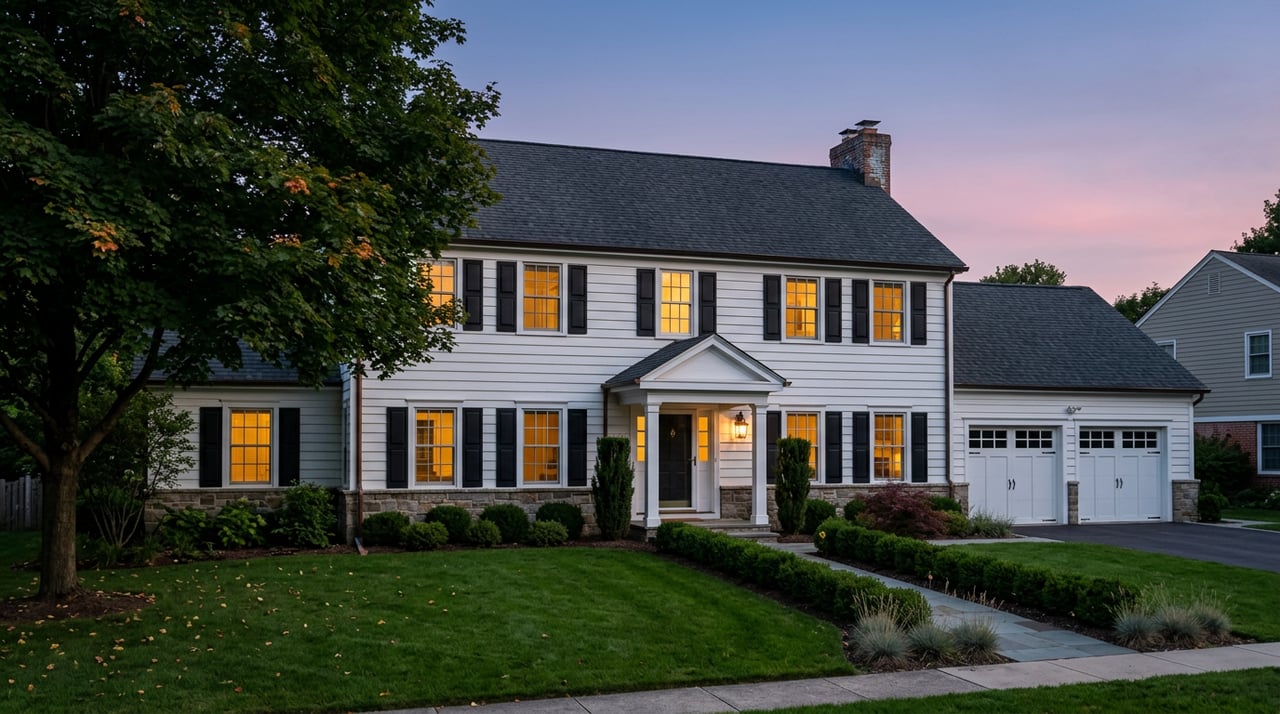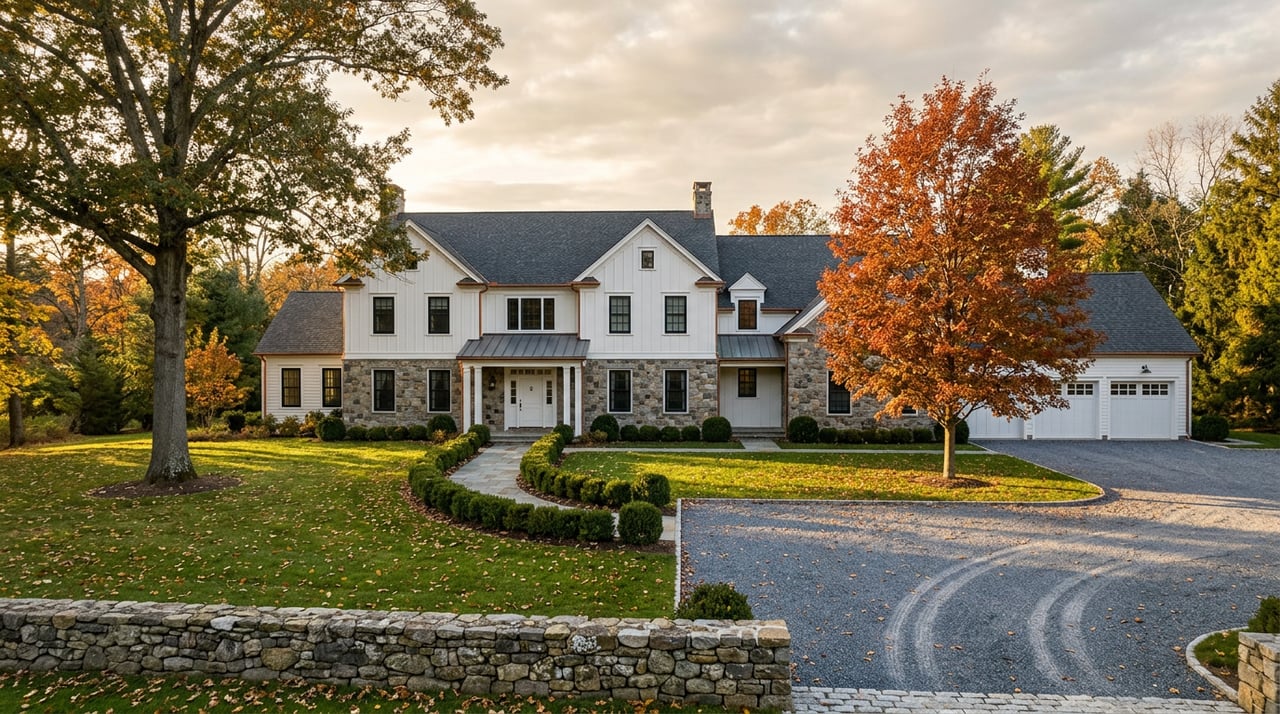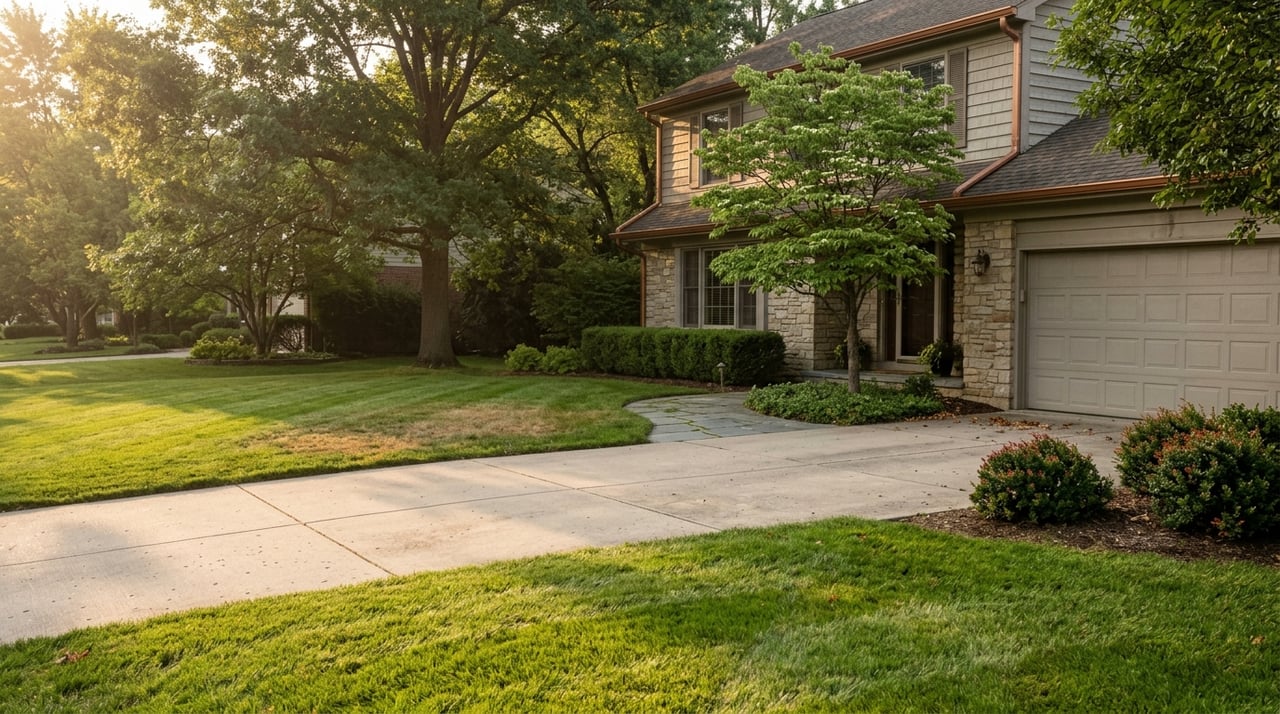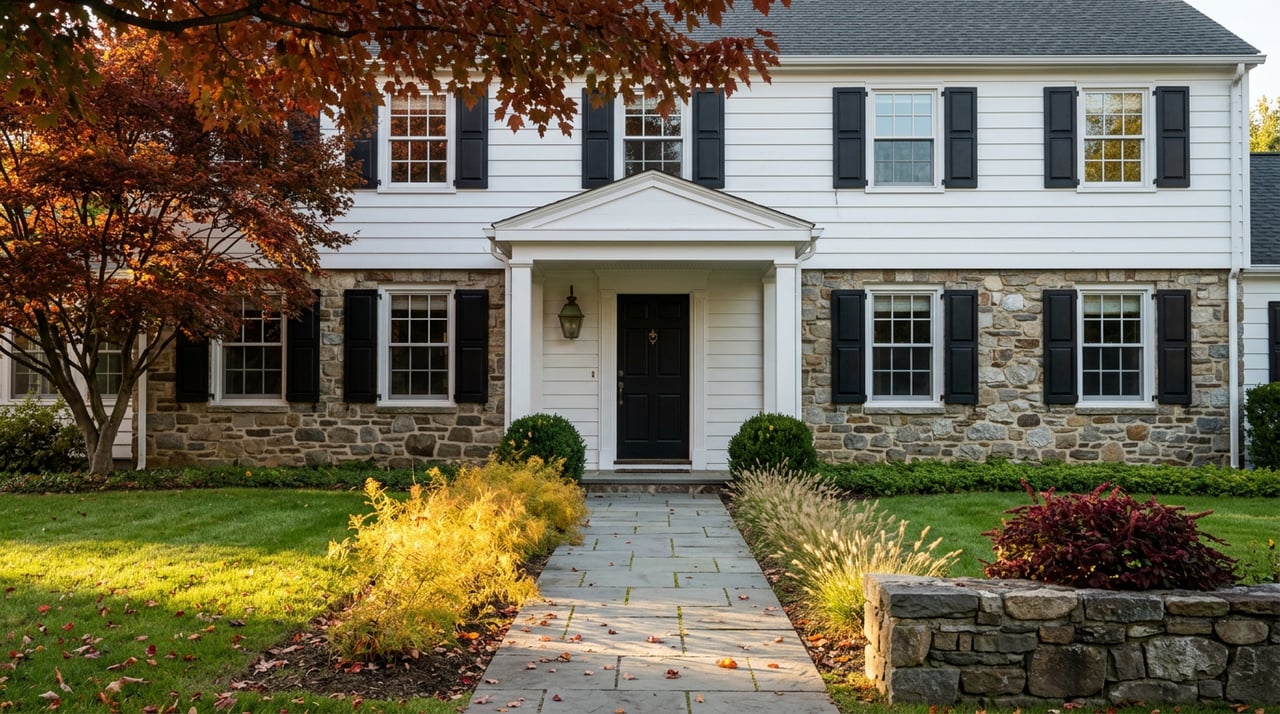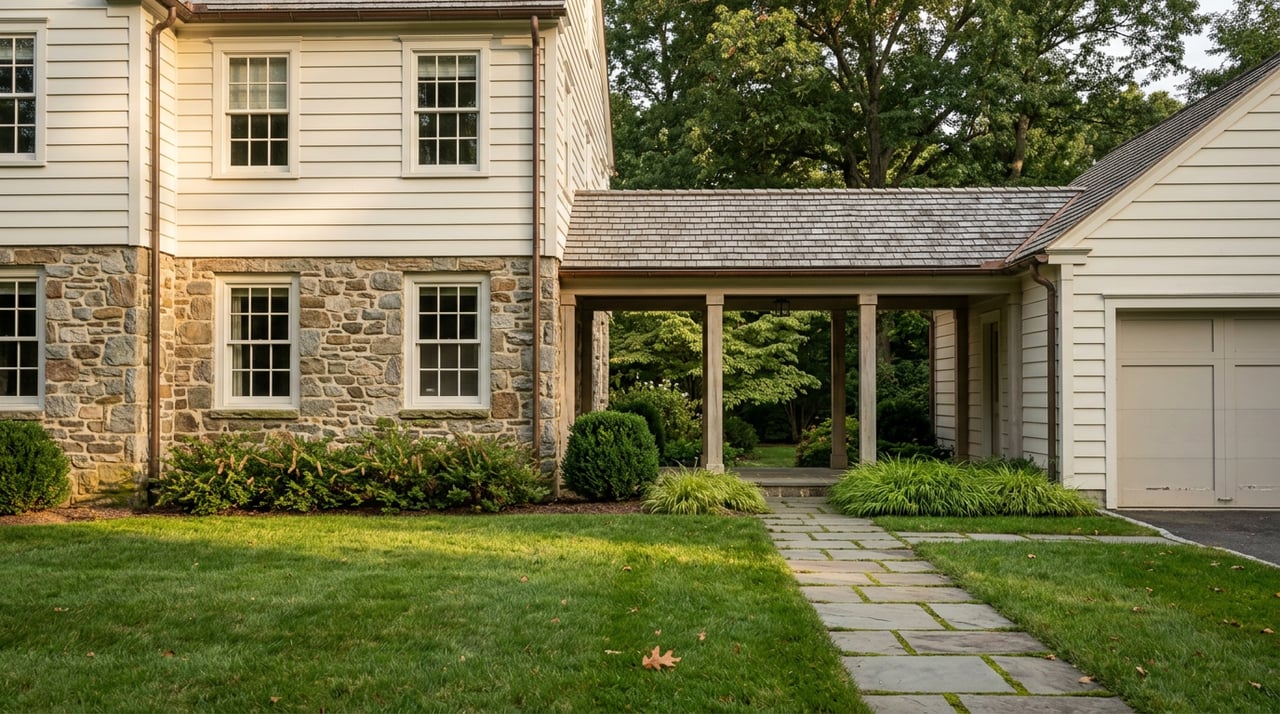
Picture two houses for sale on the same stretch of road in Warren Township. Same era, same acre-plus lot, same wooded buffer between properties, same asking price bracket. On paper, in the photos, even standing in the driveway, they look like the same decision. One of them flushes into a public sewer main. The other relies on a tank and a leach field buried somewhere in the backyard. Nothing on the listing sheet tells you which is which, and nothing about the street itself gives it away.
That distinction is not cosmetic. It changes what a buyer's attorney will ask for, what has to happen before the title can transfer, and how many weeks get added to a closing that everyone assumed would be routine. Buyers who tour Warren Township assuming the whole town works the same way underneath the driveway are building their timeline on a guess.
The half of town most listings don't mention
Warren Township's own government page on wastewater is direct about the scale of this: near half of the properties in Warren Township are serviced by an individual on-site sewage disposal system, commonly known as septic, and the township recommends pumping the tank roughly every three years to keep it healthy. That is not a rural outlier or a handful of older homes on the fringes. It is close to a coin flip across the township's entire housing stock.
A buyer touring five homes in Warren Township should expect, statistically, that two or three of them run on private septic rather than public sewer. The question is not whether to ask. It's when. Asking after an offer is accepted means asking after the leverage has already shifted.
Why the split runs through streets, not neighborhoods
The reason you can't guess by driving the block is that the boundary was never drawn around neighborhoods in the first place. It was drawn around infrastructure.
The Warren Township Sewerage Authority, an independent public entity created by township ordinance in 1972, divides its sewer system into five separate service areas, each running to its own treatment plant:
- Stage I and II service area
- Stage IV service area
- Stage V service area
- Middlebrook service area
- Berkeley Heights service area
The Middlebrook area doesn't even stay inside Warren Township once it leaves the house. Its wastewater discharges through the neighboring Township of Bridgewater and is treated at the plant operated by the Somerset Raritan Valley Sewerage Authority. A homeowner on a Middlebrook-area street is, functionally, plumbed into a different town's utility system, while a homeowner two roads over in a different stage is on a wholly separate plant, and a third neighbor nearby may have no sewer connection at all.
None of that is visible from the curb. It's an administrative map, not a real estate one, and it was finalized decades before most of the homes currently for sale were built. The only reliable way to know which side of the line a specific address falls on is to ask the township's Sewer Department directly, which took over from the former Sewerage Authority's day-to-day operations as of July 1, 2022.
What a septic system actually commits you to at the closing table
If a house turns out to be on the septic half of town, New Jersey law adds a rule that has nothing to do with whether the system is working. Under the state's septic code, formally N.J.A.C. 7:9A, cesspools must be replaced at the time of real property transfer. Not if they're failing. Not if an inspector flags an odor or a wet spot in the yard. If the system is a cesspool, the code treats the sale itself as the trigger.
A properly functioning newer septic tank and drain field, by contrast, isn't required to be upgraded just because the house is changing hands. The distinction matters enormously for a buyer's timeline, and it's one most people don't think to ask about until an inspector uses the word "cesspool" out loud for the first time.
If a full replacement is needed, the calendar is the real cost. A complete new installation typically runs 12 to 20 weeks from start to finish, and even an expedited emergency replacement rarely moves faster than 6 to 8 weeks. A standard New Jersey purchase contract, by comparison, usually allows somewhere in the range of 45 to 60 days between signing and closing. Do that math and it's easy to see how a septic discovery made during attorney review can outlast the contract's own closing window.
If the well comes with the house, add a second clock
Public water and private septic can coexist, and so can private well and public sewer, but a meaningful share of Warren Township's larger, more rural-feeling lots draw drinking water from a private well. When that's the case, a second state law starts its own countdown.
New Jersey's Private Well Testing Act requires that the untreated well water be tested and that both buyer and seller review the results before the closing of title. It has been in effect since 2002, and it applies regardless of how the house looks or what the seller says about the water tasting fine. Testing itself typically costs $1,200 to $1,500, with the seller responsible by default, and treatment systems, if contaminants turn up, ranging anywhere from $1,500 up to $10,000 or more depending on what needs correcting. The standard panel has also expanded since 2021 to include PFAS compounds, so a well test a seller had done a few years ago for their own peace of mind may not satisfy what a lender or a careful buyer expects to see now.
The law doesn't block a sale outright if the water fails a standard. What it blocks is closing without both sides having looked at the same results. That means the test has to happen early enough to leave room for a conversation, not the week before the scheduled closing date.
The two clocks that can stall a Warren Township closing
| Private septic (cesspool found) | Private well | |
|---|---|---|
| Governing rule | N.J.A.C. 7:9A, mandatory replacement at transfer | Private Well Testing Act, mandatory test and review before closing |
| Typical cost | Roughly $15,000 to $35,000 for a full new system | $1,200 to $1,500 for testing; $1,500 and up for treatment if needed |
| Typical timeline | 12 to 20 weeks for full installation; 6 to 8 weeks minimum even expedited | Weeks, driven by lab turnaround, but must finish before closing |
| Who typically pays first | Negotiated between buyer and seller | Seller, by default |
The math worth running before you write an offer
The dollar figures above rarely sink a Warren Township deal on their own. What sinks deals, or at least drags them out for months, is discovering the timeline problem after everyone has already picked a closing date. A buyer with a rate lock expiring in 30 days, or a seller who has already signed a contract on their next house, has very little room to absorb a 12-to-20-week septic installation discovered during attorney review.
The practical move is to ask two questions before an offer goes in rather than after: whether the specific address is served by public sewer or private septic, and if it's septic, whether the system is a cesspool, a modern tank and field, or something that has already failed a prior inspection. If a well is involved, ask when the required test was last done and whether it included the current PFAS parameters. None of this requires a specialist to uncover. It requires asking the township directly and asking early.
A short FAQ
How can I find out if a specific Warren Township address is on public sewer or private septic before I make an offer? Contact Warren Township's Sewer Department directly, or ask your agent to check on your behalf. Because the service area boundaries follow infrastructure history rather than visible neighborhood lines, this is not something you can reliably determine by looking at the house or the street.
Does an older septic system automatically need to be replaced when a home sells? Only if it's a cesspool. A properly functioning modern septic tank and drain field that passes inspection is not required to be upgraded solely because the property is changing hands. A cesspool, however, must be replaced at the time of transfer under state code, regardless of whether it's currently working.
If the seller already had the well tested last year, does that satisfy the requirement? Not automatically. The Private Well Testing Act requires results that both buyer and seller review before this specific closing, from a certified lab, and the standard testing panel has grown since 2021 to include PFAS compounds that older tests may not have covered. A fresh test tied to the current transaction is standard practice for a reason.
Every one of these questions is answerable well before an offer goes in, and answering them early is the difference between a Warren Township closing that runs on schedule and one that stalls on a discovery nobody budgeted time for. If you're weighing a specific address, or trying to figure out what's actually underneath a house you're considering, Brown & McCrea can help you ask the right questions before you're already under contract.