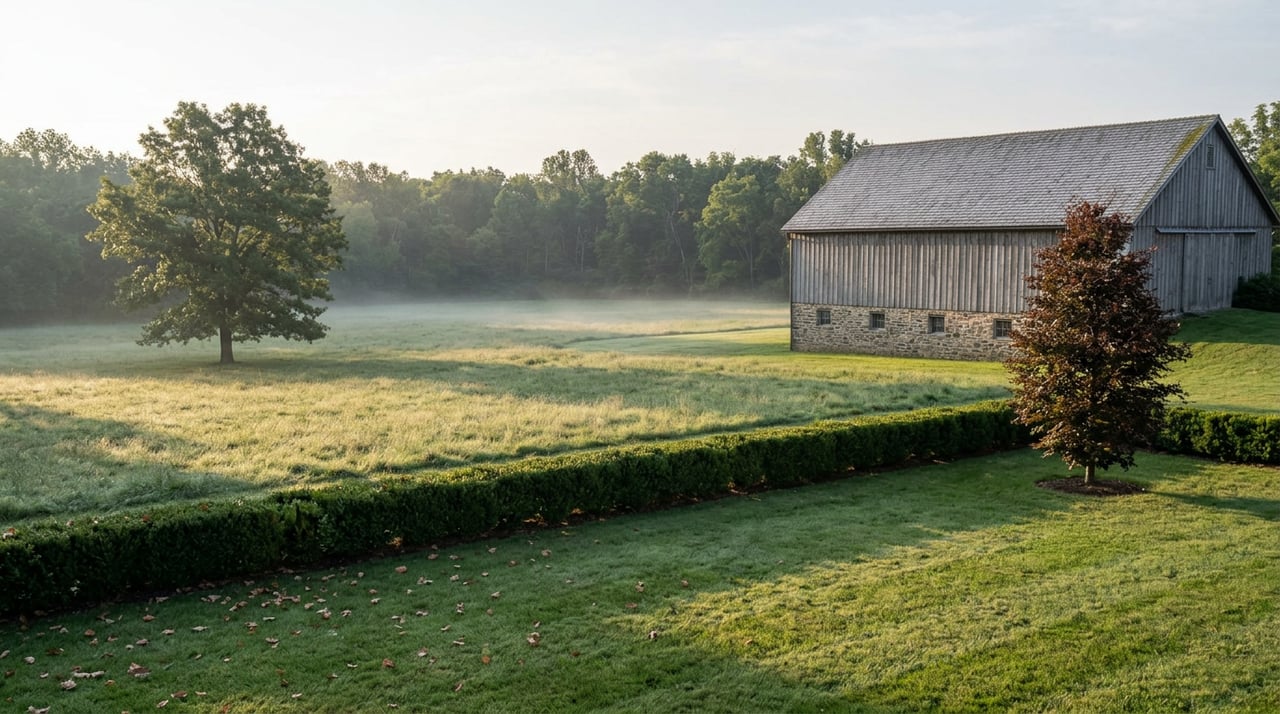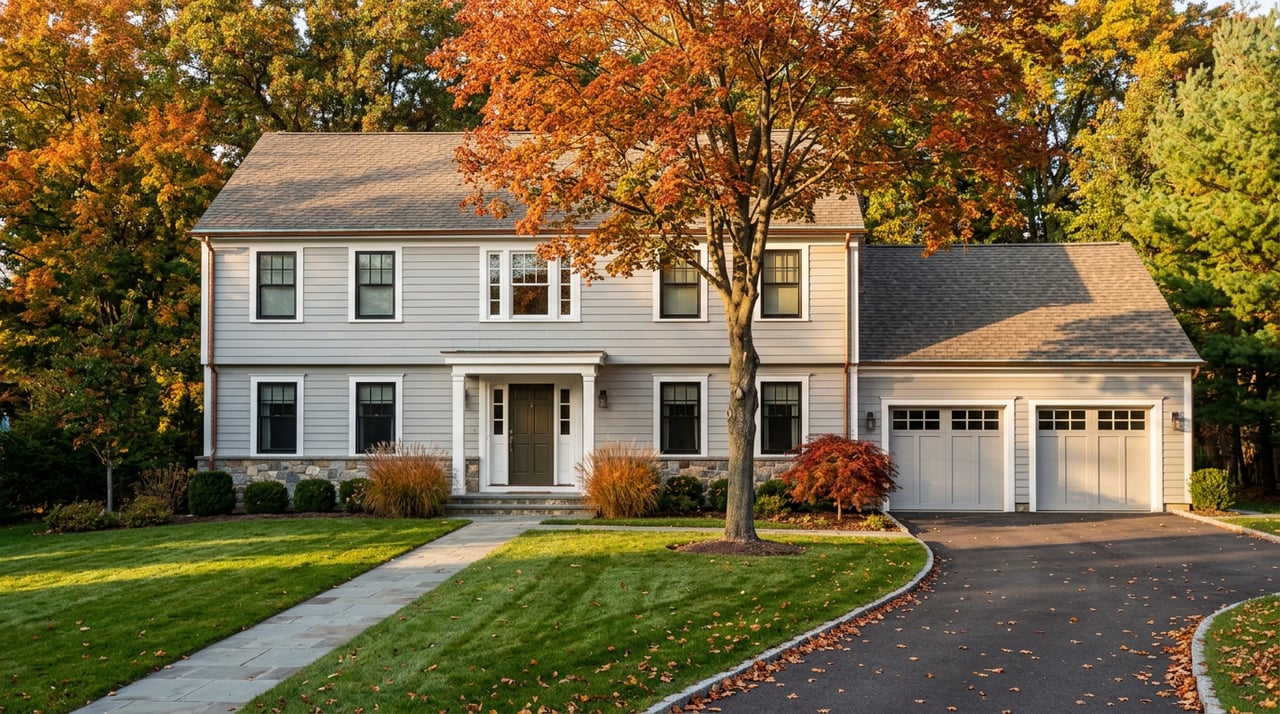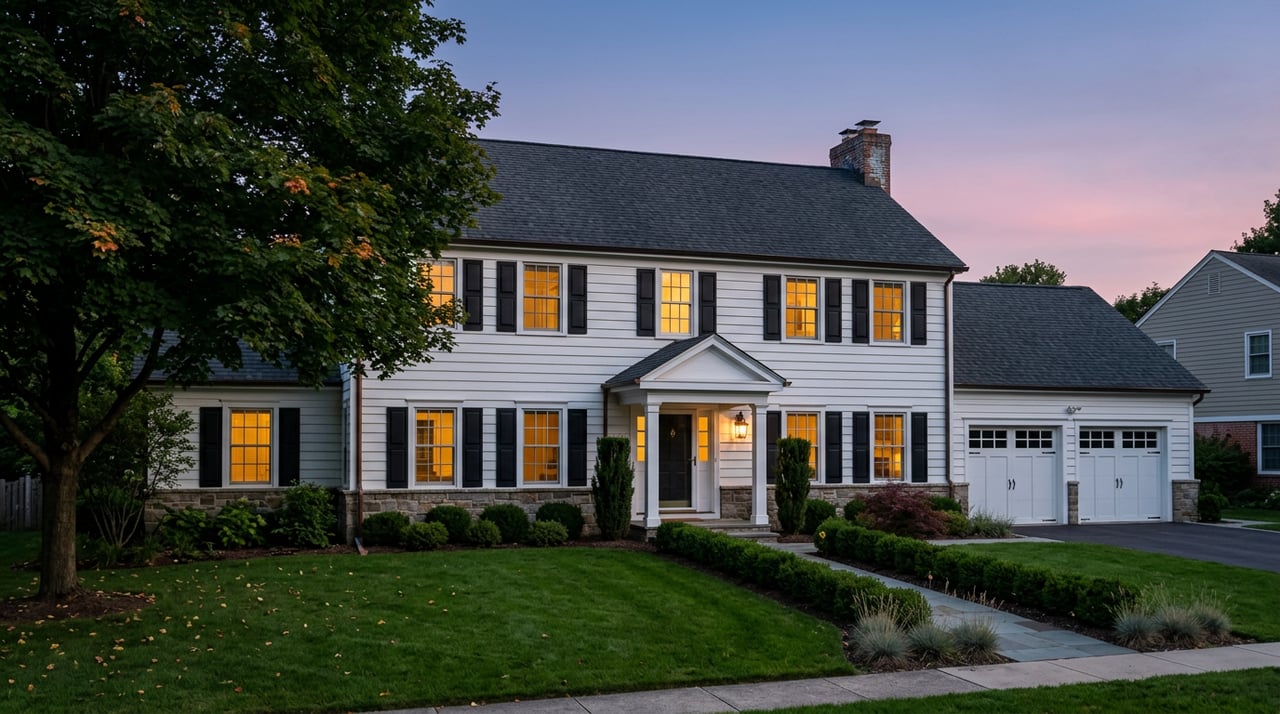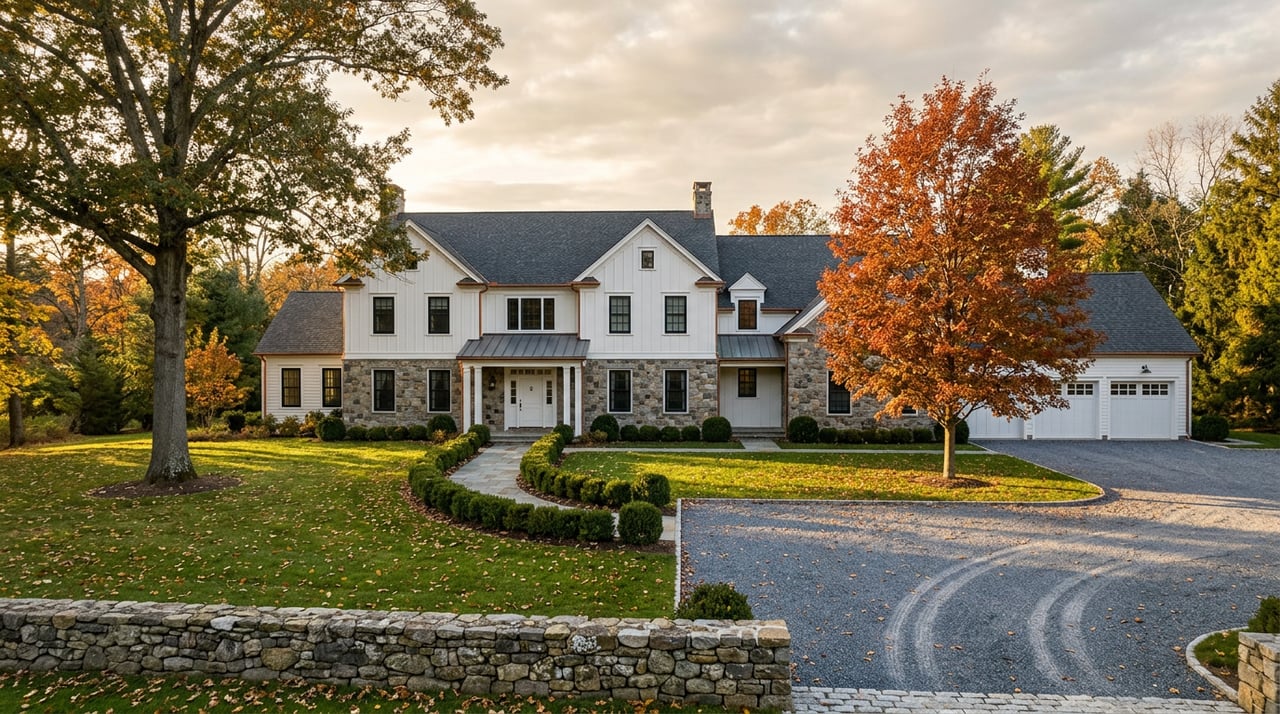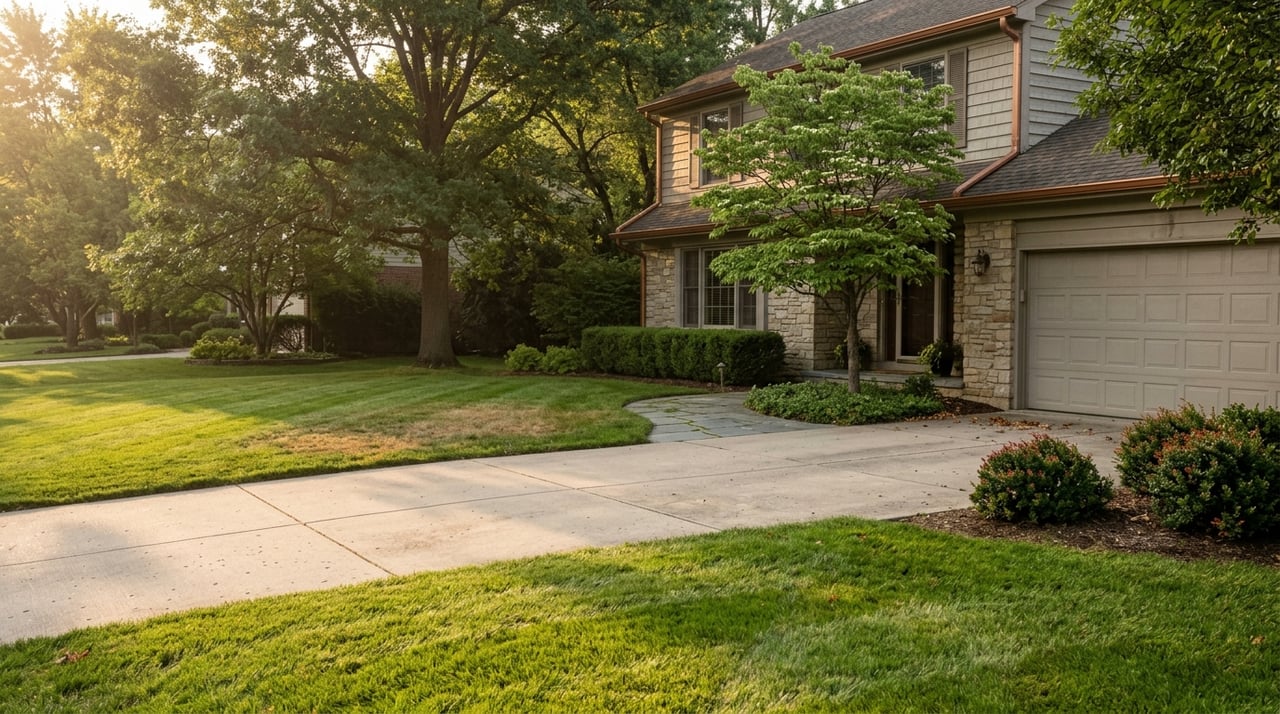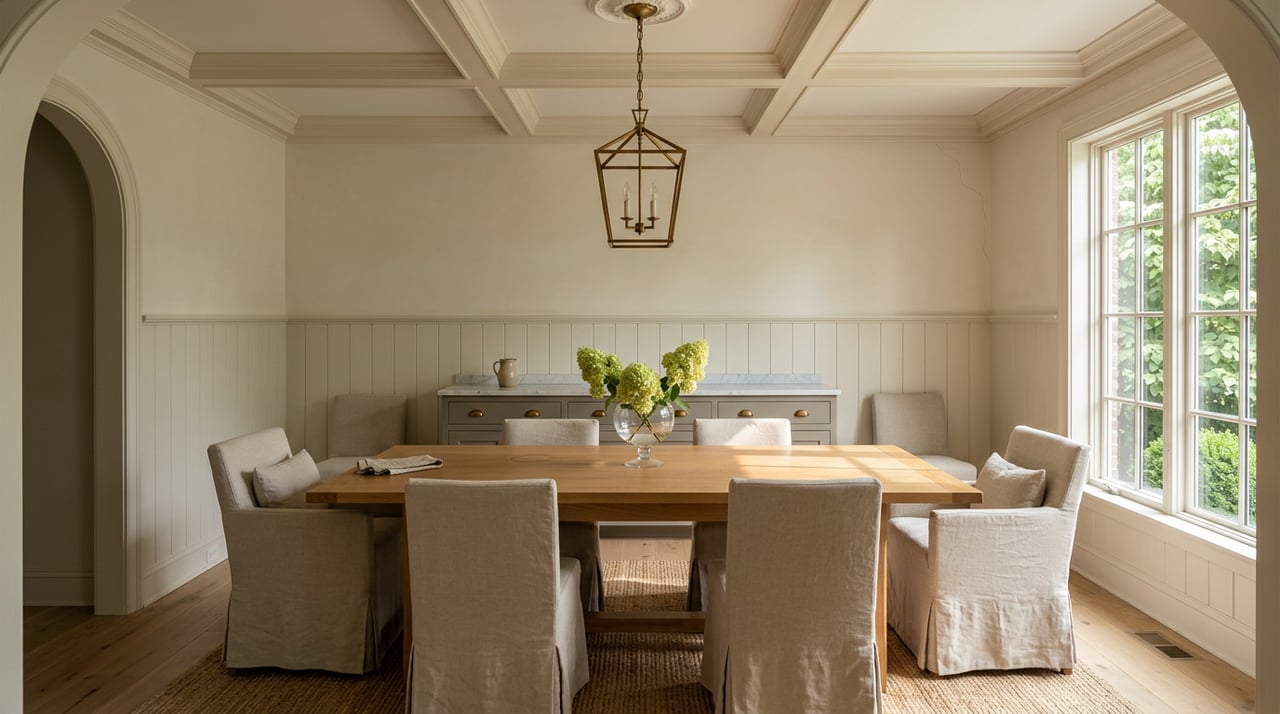
Two houses close in Bernardsville the same week. One is a 1920s colonial four blocks from the Gladstone Branch platform, on public sewer, inspected in a morning. The other sits on five gated acres up Hardscrabble Road with a private well, a septic field, a 1960s oil tank in the ground somewhere, and a due diligence period that runs three weeks longer than the buyer expected. Both sales feed the same median. Neither sale looks anything like the other.
That is the argument of this post. The Bernardsville median is a weighted average of two structurally different transactions, and a buyer who shops by that number without knowing which transaction they are actually signing up for will misread this market from the first showing.
The tell is in the inspection checklist
Start where buyers usually finish. In the walkable in-town core near Olcott Square, a home inspection is roughly what it is anywhere else in Somerset County. Two to three hours, radon canister, wood destroying insect report, sewer scope if the seller agrees. Up on the mountain, the same house triggers a different list. New Jersey's Private Well Testing Act requires that any property transaction involving a private well include a water test, and most mountain properties are on wells. Septic inspection follows its own protocol, with the inspector pumping the tank to check for cracks, running a camera through the underground pipes, and opening the distribution boxes. Add an oil tank sweep on anything built before central gas conversions arrived on that stretch of road, and add time. A historic house takes longer to inspect than a newer home in good condition, and two to three hours is the plan only for an average home.
This is the friction that shows up in the median without showing up in the median. A $1.2M in-town colonial and a $1.2M mountain-adjacent ranch are the same number and two different closings.
Three price bands, three different products
Zillow's home value index put the average Bernardsville home at roughly $979,000 as of late February 2026, up 3.6% year over year. Movoto's July 2026 read on single family list prices came in at a median of $1.19M, and 52 days on market. Redfin's most recent sale-price read, from February 2026, showed a median of $1.1M and 125 days on market compared to 71 the prior year. Three sources, three different windows, three different numbers. The reason they disagree is the reason this post exists: they are averaging unlike things.
Roughly $500K to $900K — the in-town core. This is where the borough's older housing stock lives. About 37% of Bernardsville's homes were built between 1940 and 1969, and another 31% were built before 1939, and much of that inventory sits within a walk or a short drive of the train station. Recent trades in this band include 37 West Street at $766,500 in late November 2024, on the market seven days, three bedrooms, built 1916, and 220 Hardscrabble Road at $477,500 the same month, three bedrooms, built 1921. Public sewer is common inside the borough boundary under the Bernardsville Sewer Plant Operator's jurisdiction, which shortens the inspection contingency meaningfully. Homes.com's read of the local stock lines up with this band, describing split levels, ranches, and Colonial Revivals on large lots, typically pricing between $550,000 and $900,000.
About $900K to $1.6M — updated colonials and the transitional streets. This is where the median actually lives. It is also the band that produces the most negotiation, because the same budget buys either a fully renovated three or four bedroom in an in-town neighborhood like Twin Lakes, described in one recent listing as a sought-after tree-lined neighborhood on over an acre, with an updated kitchen and a walkout ground level, or a coming-soon four bedroom at 191 Washington Corner Road listed at $1,190,000, roughly 3,500 square feet, which is a different street personality entirely. Same money, different life.
$2M and up — the Mountain. This is a separate market that happens to share a ZIP code. Active examples on the current tape include 570 Mine Brook Road at $2,200,000, 297 Hardscrabble Road at $3,495,000, 23 Charlotte Hill Drive at $3,395,000, and 450 Claremont Road at $13,750,000. The historical name for this zone is the Mountain Colony, and it is not a marketing term. It goes back to the Gilded Age, when wealthy New Yorkers bought vast estates on Bernardsville Mountain and used the Passaic Valley and Peapack Railroad, known as the Millionaire's Express, to commute from Hoboken. The estate pattern that laid down then, five to ten acres, long drives, stone walls, separated carriage houses, is still what a buyer walks into today.
One median. Three products. A buyer who tours only inside the borough core and a buyer who tours only above Mount Airy Road will each tell you they have seen "the Bernardsville market" and describe two towns.
The clock runs differently in each band
Days on market is the second place the split shows up. Movoto's July 2026 single family reading of 52 days on the market, unchanged from July 2025 is a townwide average. Broken apart, the in-town band moves closer to the county norm, the middle band around the median hovers at that 40 to 60 day range, and the top of the mountain runs long. Redfin's February 2026 snapshot of 125 average days on market, up from 71 a year earlier is heavily influenced by the small number of $3M-plus sales that dominate that month's transaction mix. That is not a slowing market. That is a small denominator with a long-tail product mixed into it.
For a buyer, the practical read is this. A well priced house in the in-town core in the $700K to $1.2M range is often a multi-offer situation inside two weeks. A well priced mountain property at $3M is not a multi-offer situation and rarely closes on the first accepted contract. Different clocks, different negotiating posture, same town.
The train question, answered honestly
The Gladstone Branch is the reason the mountain exists as a residential zone, and it is still the reason buyers choose Bernardsville over similar looking towns. NJ Transit runs the Bernardsville station on the Gladstone Branch and Morristown Line of the Morris and Essex Lines, with service to Hoboken Terminal, Newark Broad Street, Secaucus Junction, and New York Penn Station. Distance from that platform is the single most reliable price signal inside the in-town core, and it more or less stops mattering above a certain elevation, because a buyer who is spending $3M is not walking to a 6:47 train. They are driving, or they are not commuting daily at all.
The downtown itself has quietly become part of the price story. Recent food arrivals include Ristorante MV, Sette, Toca Vez, and Red Horse by David Burke. The 28-acre Olcott Avenue Historic District, recommended by the New Jersey State Review Board for Historic Sites in February 2009, is a real neighborhood on real streets, not a plaque. Outdoor draw from Scherman Hoffman Wildlife Sanctuary and Natirar Park pulls in the same direction. All of this is priced into the in-town band. None of it is priced into the mountain band, which is priced on acreage, privacy, and architectural pedigree.
A short FAQ
If I offer at the July 2026 median of about $1.19M, what am I actually shopping? A four bedroom, three bath in-town or near-in-town colonial, roughly 3,000 to 3,500 finished square feet, likely on public sewer, likely with a partial update history. You are not shopping the mountain. You are also not shopping the entry band, which trades faster and at a discount to that number.
Is the market softening or is the mix changing? Both, unevenly. The in-town core is holding, with the Movoto July 2026 read at 52 days on market, effectively unchanged year over year. The top of the mountain is where the days-on-market and per-square-foot numbers have moved most, and it is also the band with the fewest transactions, so a small shift there swings the townwide averages.
What should I add to my due diligence budget on a mountain property? At minimum, plan for a well test under the Private Well Testing Act, a full septic inspection with tank pumping, an oil tank sweep, radon, and an extra week of scheduling. On a pre-1940 home, add time for the inspector; older systems, renovations layered on renovations, and outbuildings all extend the visit.
Where does the entry-level in-town inventory actually live? Streets in and around the Olcott Avenue Historic District, and the older transitional blocks near the tracks. These are the homes that produced the sub-$800K sales referenced above, and they are the fastest-moving product in the borough.
Working the number, not the average
The most useful thing a buyer can do in Bernardsville is stop treating the median as a description of a house and start treating it as an average of two markets. Decide which market you are actually shopping. The in-town buyer and the mountain buyer are running different playbooks: different inspection windows, different negotiation timelines, different questions to ask the seller, different reasons the last comparable sale looks the way it does.
That is the work a local team does before the first showing, not after the inspection report lands. If you are weighing Bernardsville against a neighboring Somerset Hills town, or trying to figure out which of these three bands your budget honestly buys, Brown & McCrea would be glad to walk through it with you. Contact Us to start the conversation.